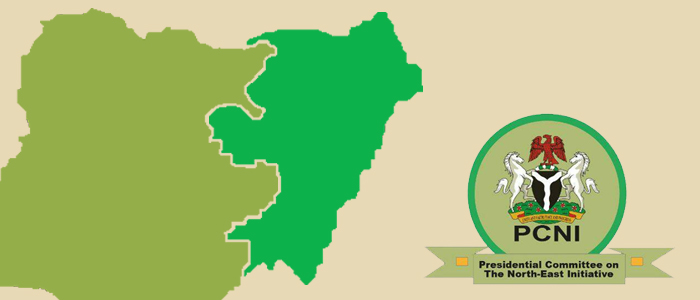
"With more than 190 million people in 37 states, Nigeria is already the most populous country in Africa. UNFPA projections suggest that by the year 2050, this population will increase to 400 million," Dr. Chinwe Effiong, Assistant Dean of MSU's Global Youth Advancement Network, said. "This massive population explosion is alarming on many fronts, one of which is the strain it will place on limited resources such as food, land, and jobs. The resultant social problems are already evident in many urban areas, and marginalized rural communities, where terrorist activity has started to take its toll."
In an effort to re-stabilize the region and achieve peace, Nigerian President Muhammadu Buhari developed the North East Reconstruction Strategy (the Buhari Plan) in 2009—it is a "blueprint for the comprehensive humanitarian relief and socioeconomic stabilization of the North-East region, as well as the return and resettlement of displaced persons". Implemented and enforced by the Presidential Committee on the North-East Initiative (PCNI), the Buhari Plan includes various interventions for the region to restore livelihoods and provide relief, stimulate the economy, facilitate peace building, and more.
To contribute to the restoration of Nigeria's North-East region, Professor Soji Adelaja (AFRE) and Dr. Effiong visited Abuja, Nigeria in April 2018 to determine how MSU could use its institutional strengths to support the implementation of the North East Study Abroad Program (NESAP)—a program under the Buhari Plan. Drs. Effiong and Adelaja met with various stakeholders within PCNI and the Nigerian government, including PCNI's Program Management Unit, the Secretary to the Federal Government, and USAID Nigeria's education office. These meetings have helped to further define MSU's potential role within the Buhari Plan through the establishment of an African Scholars Program—a scholarship program provided to beneficiaries from North-East Nigeria to attend MSU, which has been modeled after the highly impactful Mastercard Foundation Scholars Program at MSU.
MSU has a long history of collaboration with African institutions, which includes its role in the establishment of the University of Nigeria, Nsukka in the 1950s. MSU is currently engaged in research and service activities in over 30 African countries—including Nigeria—and has designated 2018 to be the Year of Global Africa—an 18-month celebration of MSU's rich history of engagement with partners across Africa and throughout the African Diaspora.
As an initiative under the Buhari Plan, NESAP aims to develop young people from North-East Nigeria into transformative leaders by providing them with a world-class education and wrap-around support services, such as leadership development, service learning, entrepreneurship training, and one-on-one mentorship. This program, which is being co-designed by MSU and the Nigerian government, will demonstrate the university's commitment to the success of Africa and Africa's leaders.
As part of the five-year commitment, NESAP beneficiaries would spend one year at American University in Yola preparing for their study abroad, followed by four years of education at MSU under the African Scholars Program. During their preparation year at American University, scholars would take remedial studies (including Mathematics and English), undergo psycho-social counselling to address any post-conflict trauma, and receive mentorship to ease their transition into United States culture and academia. At MSU, the African Scholars Program would take a holistic approach through the development of beneficiaries' core disciplinary skills in their various courses, while also supporting and guiding the development of their leadership skills.
This program would close the gap in talent, professional expertise, and intellectual leadership capacity between North-East Nigeria and other geo-political zones in the country. By training a new cadre of graduates at the undergraduate and post-graduate levels, NESAP would provide North-Eastern Nigerians with a competitive advantage through education, while also building their capacity to initiate change in their home communities.
For more information about the Buhari Plan and initiatives in North-East Nigeria, visit pcni.gov.ng.

Cohort 4 updates
Attached to the Soil


